
Service Robots in a Dental Practice: Future or Gimmick?
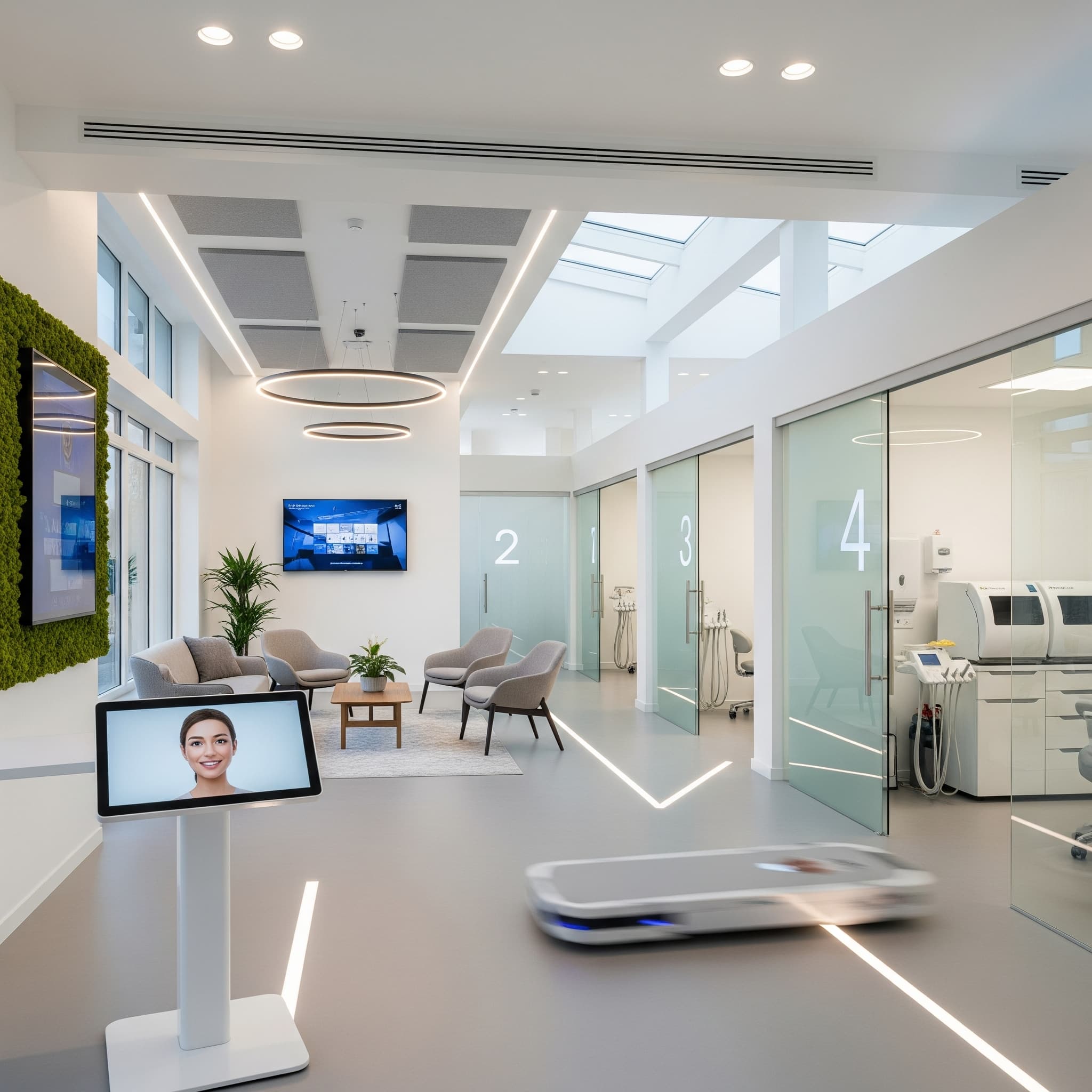
Robots at the Dentist—Really?
When we mention that our practice uses robots, we get surprised looks. One question always comes up: Does the robot operate?
No. Absolutely not. But what our robots do is just as valuable, even if it sounds less dramatic.
At Pul's Zahnmedizin, we deploy two robot systems: a service robot for practice logistics and an autonomous cleaning robot for practice hygiene. Both have a clear mission: support the team so they can focus on what really counts—treating and caring for our patients.
The background is serious: According to the National Dental Hygienists Association (KZBV), dentistry in Germany accounts for approximately 878,000 jobs (Source: KZBV/BZÄK, Data and Facts, 2024). At the same time, the industry faces massive staff shortages. The German Dental Association warns of an "unprecedented skills shortage": dental assistants rank first among shortage occupations in Germany in 2024, and by 2027 roughly 11,000 dental assistants are expected to be missing (Source: KZV Baden-Württemberg / German Dental Association, 2025). Every minute trained staff spends on logistics is a minute missing from the treatment chair.
The Pudu T300: The Logistical Backbone
The Pudu T300 is a professional service robot designed to transport heavy loads up to 300 kilograms. It's already deployed thousands of times in industry and logistics. We use it as an intelligent logistics system that handles all material transport in the practice.
The robot navigates using a combination of LiDAR-SLAM and visual SLAM, can pass through passages as narrow as 60 centimeters, and detects obstacles both on the ground and in the air. With battery life of 8 hours and quick charging in just 2 hours, it's built for all-day practice use. Navigation works without any infrastructure modifications—the T300 creates its own map (Source: Pudu Robotics, T300 Product Specifications).
What Bodo, Our T300, Does for Us
We affectionately call our T300 Bodo. His tasks are clearly defined:
- Deliver treatment carts: Bodo brings pre-configured instrument carts directly to the correct treatment room, matched to the planned procedure. When the schedule shows a filling, the right cart is ready before the patient sits down.
- Resupply materials: Gloves, disposables, dental supplies. Bodo transports inventory from storage to treatment rooms without clinical staff leaving the room.
- Sterilization runs: Used instruments go to Bodo for processing and sterile sets come back. Systematic, reliable, documented.
- Documents and tablets: Patient files, tablets for digital consent forms, or paperwork. Bodo delivers them where needed.
Why This Makes a Real Difference
In a dental practice, every minute counts. When a dental assistant fetches supplies from storage, transports instruments for sterilization, or prepares treatment carts, she's not at the patient chair. It sounds minor, but adds up to hours over a day.
The global market for healthcare logistics robots confirms this trend. According to market research firm IMARC Group, the global hospital logistics robot market reached $1.67 billion in 2024 and is projected to grow to $7.76 billion by 2033, a compound annual growth rate of 17.7 percent (Source: IMARC Group, Hospital Logistics Robots Market, 2025). The International Federation of Robotics (IFR) reported nearly 200,000 professional service robots sold in 2024, with over 102,900 in transport and logistics alone—a 14 percent increase from the previous year (Source: IFR, World Robotics Report, 2025).
Bodo handles exactly these time-consuming tasks. The result: our clinical staff stays where they're needed—with patients.
Combined with our AI assistant Linda, many of these workflows are automatically coordinated. When an appointment is scheduled, the system knows which room needs what materials, and Bodo delivers. This integration of AI-based planning and robot-supported logistics is what sets our practice apart.
Good technology doesn't replace people. It gives them the freedom to do what really matters.
Safety and Certification
The Pudu T300 is certified to ISO 3691-4, the international standard for autonomous floor transport vehicle safety. It has multiple safety systems: LiDAR sensors, depth cameras, collision protection sensors, and emergency stop buttons. Obstacles are detected in real-time, both at floor level and overhead. For a dental practice where patients and staff move freely, this safety equipment is essential.
The Cleaning Robot: Autonomous Hygiene
Hygiene in a dental practice is non-negotiable. It's the foundation for safe treatment and patient trust.
Our autonomous cleaning robot operates on fixed schedules and cleans practice areas systematically and completely. It follows defined routes, documents its work, and ensures no area is missed.
Market figures confirm the trend here too: According to IFR, the market for professional cleaning robots grew 34 percent in 2024 to over 25,000 units sold worldwide (Source: IFR, World Robotics Report, 2025). The driver is everywhere the same: staff shortages and the desire for consistently high quality.
Benefits of Autonomous Cleaning
- Consistency: The robot cleans equally thoroughly every day, regardless of time or workload. Human error from fatigue or time pressure is eliminated.
- Documentation: Each cleaning is logged. This creates transparency and supports compliance with hygiene standards legally required for dental practices.
- Staff relief: Practice team members are freed from routine tasks and can focus on patient care.
- Availability: The robot cleans outside business hours—early morning or late evening—without overtime or extra staff.
What Patients Gain
The real benefit isn't visible, but shows in the results:
- Shorter wait times, because workflows become more efficient and treatment rooms are prepared faster. When Bodo has the instrument cart ready before the appointment, manual preparation by staff is eliminated.
- Higher hygiene standards, because cleaning is systematic and documented, without variation.
- More personal attention, because the team spends less time on logistics and can focus entirely on you. In an industry facing thousands of staff shortages by 2027, every minute gained with patients is valuable.
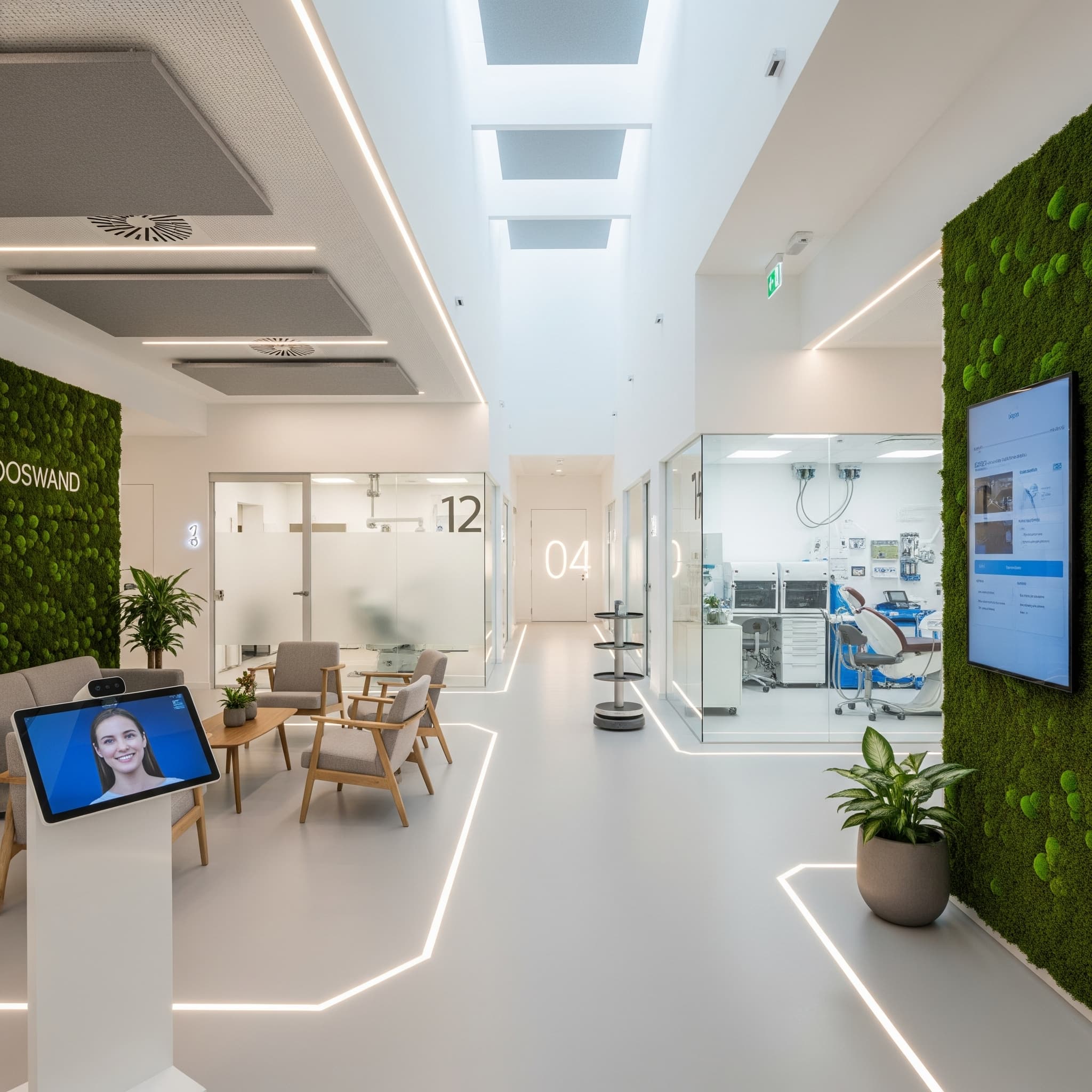
Technology in the Service of People
We deploy robots not because it looks modern. We deploy them because they solve a concrete problem: supporting a team that should focus on complex medical work.
Every technology in our practice must answer one clear question: does it improve patient care? If yes, it stays. If no, it doesn't.
Bodo and our cleaning robot pass this test. They make the practice more efficient, more hygienic, and give our team the freedom to be where it counts—at your side.
This Isn't Vision—This Is Our Plan
Both robot systems are integral to our practice planning for opening in 2027. They're tested, proven, and ready for dental practice use.
We're building a practice where technology and humanity work together. Join us on this journey.
Frequently Asked Questions (FAQ)
Isn't a service robot overkill in a dental practice?
No. The staff shortage in dentistry is real: according to the German Dental Association, dental assistants are the top shortage occupation. By 2027, roughly 11,000 dental assistants will be missing. Every logistics task the robot takes frees staff for actual patient care. The Pudu T300 isn't a gimmick—it's a professional logistics system used worldwide in industry and healthcare.
What exactly does Bodo transport in the practice?
Bodo transports treatment carts with pre-configured instrument sets, consumables like gloves and disposables, instruments for sterilization and back again, and tablets and documents for patient education. He's not a beverage delivery robot—he's a logistics system with load capacity up to 300 kilograms. Routes are automatically planned based on treatment schedule and room assignment.
Is the robot safe for patients and staff?
Yes. The Pudu T300 is ISO 3691-4 certified and has multiple safety systems including LiDAR sensors, depth cameras, collision protection sensors, and emergency stops. It detects obstacles in real-time and avoids them. Navigation technology allows it to safely pass narrow passages starting at 60 centimeters wide.
How do the robot and AI assistant Linda work together?
Linda coordinates practice operations based on the appointment schedule. When a patient is checked in and the next appointment involves a specific procedure, the system tells Bodo which treatment cart needs to go to which room. This automatic integration of AI planning and robot logistics ensures everything is ready before the patient enters the treatment room.