
Why We're Building an AI Reception Assistant
The Real Problem
In many dental practices, clinical staff spend a large part of the day on tasks that have nothing to do with dentistry: answering phones, scheduling appointments, verifying insurance information, processing forms, checking in patients.
This isn't a criticism—it's reality. And the consequence is clear: every minute a dental assistant spends at the reception desk is a minute missing from the treatment room.
Meanwhile, patients face the other side of this problem: they call, the phone rings, but nobody answers. According to an analysis by the phone service provider Starbüro, 90 percent of all medical practices struggle with problems of phone accessibility (Source: Starbüro, Accessibility Study of Medical Practices, 2024). If a practice misses just ten potential new patient calls per month, that's 120 lost patients per year, with corresponding effects on practice capacity and patient care in the region.
At Pul's Zahnmedizin, we want to change both sides of this problem fundamentally.
A Problem That's Getting Worse: The Skills Shortage
The background makes this even more urgent. The German Dental Association is warning of an "unprecedented skills shortage" in dentistry. Dental assistants rank first among shortage occupations in Germany as of 2024, and by 2027 approximately 11,000 dental assistants are expected to be missing (Source: KZV Baden-Württemberg / German Dental Association, 2025).
The consequence: there simply aren't enough trained staff to fully staff both reception and treatment rooms. Practices that don't solve this double burden intelligently will have to make compromises either in accessibility or treatment quality.
McKinsey confirms this trend from a broader perspective: healthcare facilities using AI for administrative processes see productivity increases of 15 to 30 percent (Source: McKinsey & Company, "Reimagining Healthcare Service Operations in the Age of AI", 2024). Medical practices with AI-assisted reception systems report 30 percent improvement in administrative efficiency and significantly higher patient satisfaction.
Then There's the Language Barrier
Dortmund is diverse. In our future practice, patients will speak German, Turkish, and English. Not everyone feels confident asking medical questions in a foreign language. And when people are uncertain, they often don't ask at all.
A receptionist, however dedicated, can't simultaneously manage three languages fluently while the phone is ringing, a patient is waiting at the desk, and the next treatment room needs preparing. This isn't a matter of competence—it's the physical limits of one human being.
For patients who can express themselves in their native language, barriers drop. Whether it's preparing for a procedure, clarifying insurance questions, or describing concerns, communication in a familiar language builds trust and improves care quality.
Our Solution: Linda
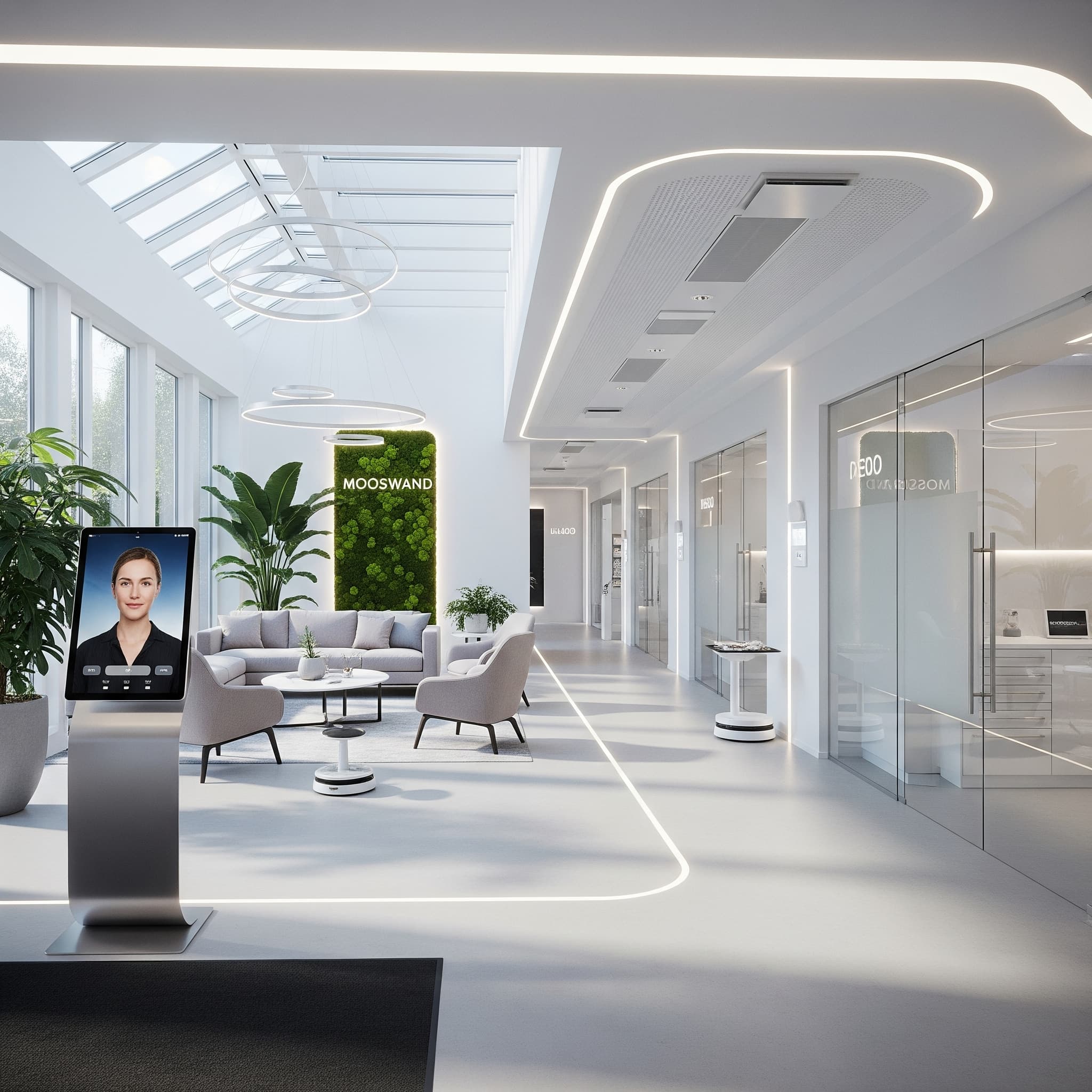
That's why we're developing Linda, an AI assistant designed specifically for use in a dental practice.
Linda isn't an off-the-shelf chatbot. Our team developed her and understands the workflows of a dental practice. She speaks German, Turkish, and English—naturally and at native speaker level. Unlike generic voice assistants, Linda knows the specific workflows of a dental practice: from check-in through insurance verification to treatment preparation.
What Linda Handles: The Complete Check-In Process
Linda takes over the entire reception process—structured and reliably:
- Greeting and identification: When a patient enters the practice, Linda greets them in their preferred language and verifies identity.
- Verify insurance data: Linda collects and verifies insurance information, identifies missing details, and alerts the patient.
- Forms and documents: Linda ensures all necessary forms are present, from medical history to privacy agreements. Missing documents are provided digitally on the spot.
- Notify treatment room: Only once check-in is complete is the treatment room notified. The team knows: the patient is ready, all documents are here.
- Available 24/7: Questions about hours, treatments, or directions are answered anytime by Linda—evenings, weekends, and holidays. Not an answering machine, but real answers.
- Multilingual communication: Patients can communicate in their preferred language. Linda automatically detects the language and switches seamlessly.
- Treatment preparation: Linda helps patients prepare for their visit, explaining what documents to bring and what to keep in mind for specific procedures.
The Real Difference
The point isn't that Linda answers calls. The point is what happens after: Our clinical staff no longer has to bounce between reception desk and treatment chair. They stay where their expertise is needed—in the treatment room, with you.
Linda handles routine operations. The team handles dentistry. In times of staff shortages, this isn't a comfort feature—it's a necessity.
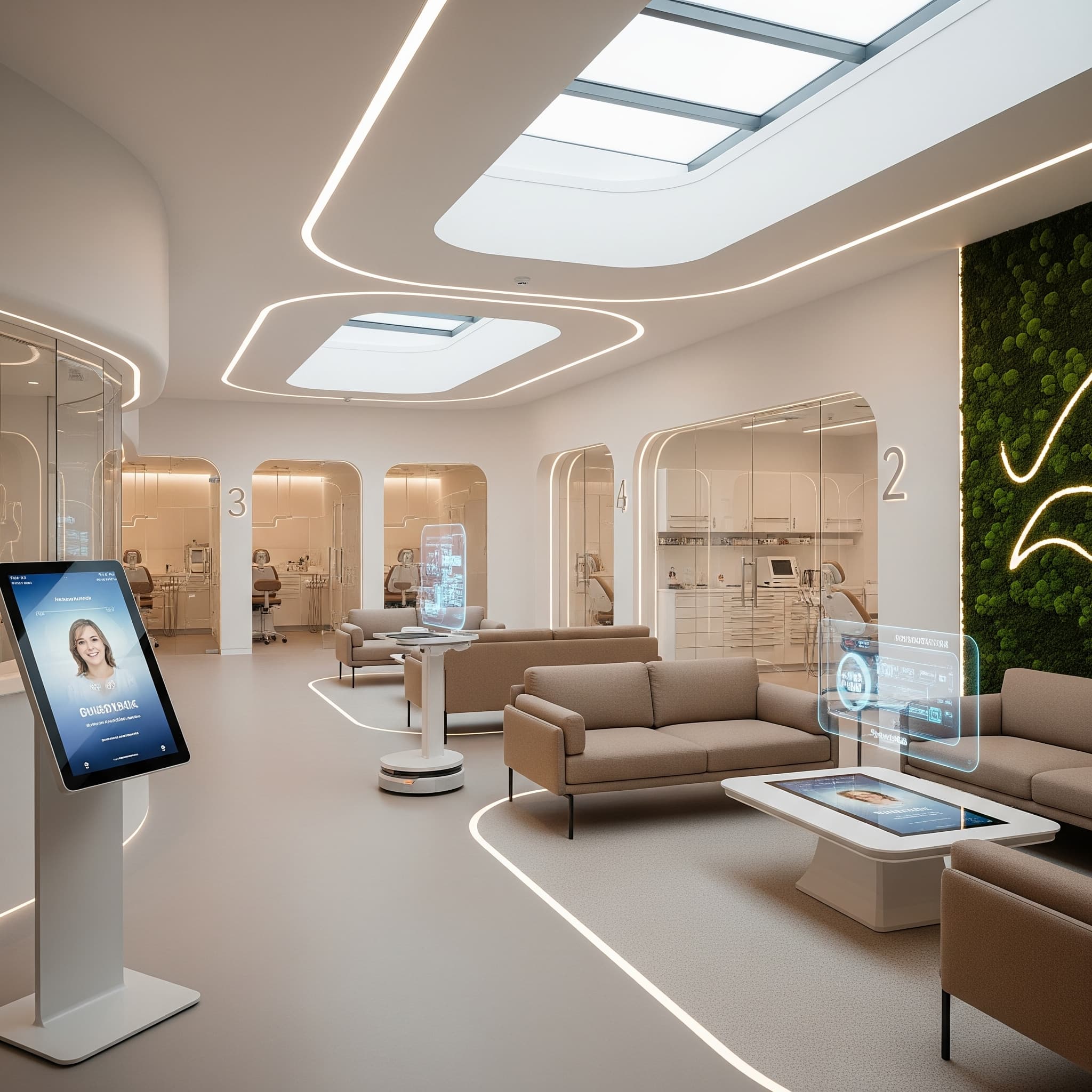
Combined with our service robot Bodo, Linda also coordinates logistics in the practice. When a patient is checked in and the next appointment is scheduled, Linda ensures the correct instrument cart is delivered to the right room—automatically and without manual effort.
What Linda Deliberately Doesn't Do
As important as technology is to us, there are clear boundaries:
- No diagnosis: Linda doesn't make medical diagnoses or recommend therapies. That remains the responsibility of our treatment team.
- No medical decisions: When patients report health concerns, Linda always refers them to our staff. AI can support medical judgment, but never replace it.
- No permanent data storage: Conversations with Linda aren't permanently saved. Patient data isn't stored on external servers.
- Always transparent: Patients always know they're talking to AI and can continue the conversation with a human at any time.
Technology should make healthcare more accessible, not replace the dentist.
Data Protection to the Highest Standards
As a dental practice in Germany, we're subject to the GDPR and the strict requirements of the Federal Data Protection Act (BDSG). When it comes to AI in healthcare, we take this seriously.
The German Medical Association (KBV) published comprehensive guidance on AI use in medical practices in 2025, which also considers the requirements of the EU AI Regulation (AI Act) (Source: KBV, Guidance on AI in Medical Practices, 2025). We follow these standards.
Concretely, that means:
- Own infrastructure: Linda runs on our own infrastructure. Patient data is never transmitted to third parties.
- European servers: We rely exclusively on European cloud services with data centers in the EU, compliant with GDPR's strict data transfer requirements.
- Encrypted communication: All data transfers are encrypted using current standards (TLS 1.3, AES-256).
- Data minimization: Only data necessary for each specific operation is collected, nothing more.
- Transparency: Patients always know they're talking to AI and can request to speak with a human at any time.
- Trained staff: All employees working with AI systems receive training on proper use, including technical, legal, and ethical aspects.
Why This Matters
An AI reception assistant isn't a gimmick. It solves a real problem: more time for what matters—treating and caring for our patients.
The numbers speak plainly: 90 percent of medical practices struggle with phone accessibility. Thousands of trained staff are missing. At the same time, administrative demands keep growing, from documentation requirements to quality assurance. AI-assisted reception systems aren't science fiction—they're a practical response to an acute healthcare problem.
When staff doesn't have to be split between reception and treatment room, everyone wins: patients get more attention, the team can focus on their clinical expertise, and the practice runs more efficiently. The proportion of doctors using AI in daily practice has risen from 38 percent in 2023 to 66 percent in 2024 according to recent surveys (Source: AI in Healthcare Statistics, 2024). The trend is clear.
This isn't a future vision. It's what we're working on right now.
Stay Tuned
We'll introduce Linda before our practice opens and show how she works in daily operations. Until then, we're building the best AI reception assistant for a dental practice—thoughtful, secure, and patient-centered.
Follow our journey and be among the first to know when Linda is ready.
Frequently Asked Questions (FAQ)
What exactly does Linda do as an AI reception assistant?
Linda handles the complete check-in process: greeting patients, verifying identity, collecting insurance information, ensuring all forms are present, and notifying the treatment room only when everything is ready. Additionally, she answers questions 24/7 about hours, treatments, and directions. Linda speaks German, Turkish, and English at native level. This frees clinical staff from routine tasks so they can focus on treatment.
Are my data safe with an AI assistant?
Yes. Linda runs on our own infrastructure with European servers. Patient data is never transmitted to third parties. All data transfers are encrypted (TLS 1.3, AES-256), and only necessary data is collected. We comply with GDPR, the Federal Data Protection Act, and KBV guidance on AI in medical practices. Conversations aren't permanently saved.
Does Linda replace our practice staff?
No. Linda handles administrative routine tasks like check-in, insurance verification, and frequently asked questions. This frees our clinical staff to focus on medical care. Given the skills shortage—with the German Dental Association projecting roughly 11,000 missing dental assistants by 2027—this is staff relief, not reduction. Linda doesn't diagnose or make medical decisions.
Why does Linda speak multiple languages?
Dortmund is a diverse city. Many patients speak German, Turkish, or English as their first language. Communicating medical concerns in a foreign language can be a barrier. Linda automatically detects the patient's language and switches seamlessly. This ensures every patient feels understood regardless of background, improving both service and the quality of information needed for good treatment.